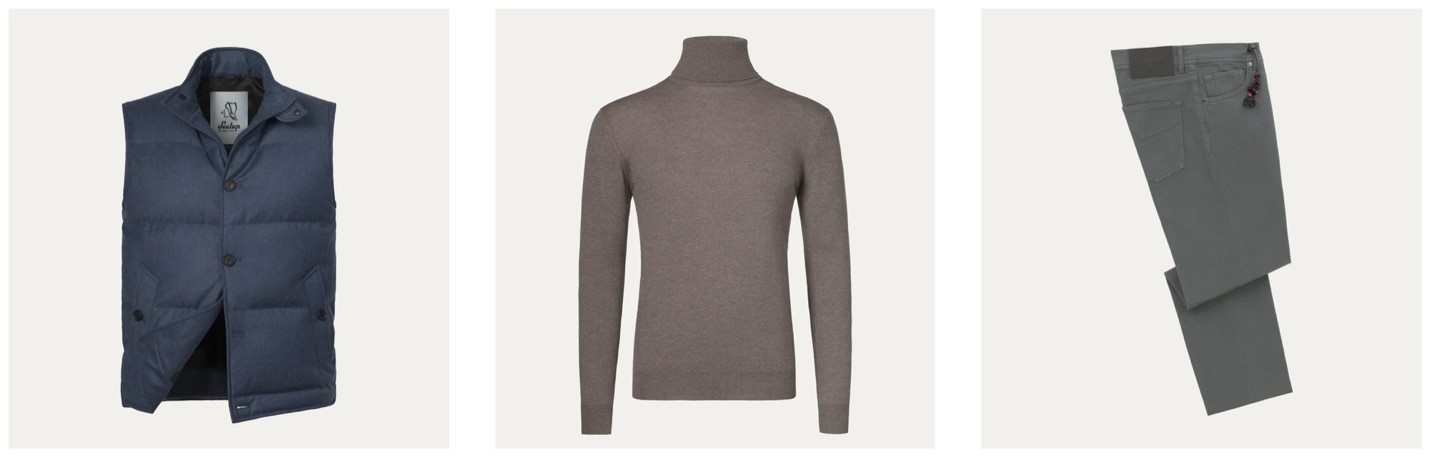
Two jackets can look remarkably similar on a hanger yet behave very differently after a year of regular wear. One retains its shape, remains comfortable throughout the day, and develops a pleasing character. The other begins to sag at the shoulders, loses its clean lines, or shows premature wear around the cuffs. Understanding these differences is essential when exploring luxury menswear through specialist retailers such as sartale.com, where collections of tailored clothing, knitwear, and accessories offer opportunities to compare different approaches to materials and design.
The price of a garment provides relatively little information about its actual quality. Manufacturing costs, brand positioning, distribution expenses, and retail margins all contribute to the final figure. Specialist menswear retailers such as Sartale offer collections that allow customers to compare different approaches to fabric selection, construction, and design. A prestigious label may indicate a particular design philosophy or production standard, but it cannot guarantee that every piece will perform equally well. Evaluating premium clothing requires closer examination of what lies beneath the surface, from the structure of the fabric to the way individual components are assembled.
A well-made garment should satisfy several requirements simultaneously. Its material must suit the intended purpose, its construction should support the natural movement of the body, and its proportions must complement the wearer. Equally important is the ability to withstand cleaning, repeated use, and reasonable alterations. These characteristics distinguish clothing that merely looks expensive from pieces that justify their place in a carefully assembled wardrobe.
Fabric Quality Begins with the Right Materials
Fabric is often the first characteristic people associate with luxury clothing. Fine wool, cashmere, long-staple cotton, and carefully woven linen can provide excellent comfort and appearance, but the name of a fiber alone reveals surprisingly little. Two sweaters labeled as pure cashmere may differ considerably in softness, elasticity, resistance to pilling, and ability to retain their shape. The differences arise from fiber characteristics, yarn preparation, knitting density, and finishing processes.
Wool illustrates why material quality cannot be reduced to a single specification. Fine fibers generally feel softer against the skin, while yarn structure and fabric construction influence durability, drape, and wrinkle resistance. A lightweight worsted wool suit may be appropriate for frequent business travel, whereas a heavier flannel jacket offers a softer appearance and greater warmth. Neither is automatically superior. Their suitability depends on climate, frequency of use, and the wearer’s expectations.
Cotton requires similar consideration. High-quality shirting can be made from several types of cotton, but fiber length, yarn consistency, and weaving techniques influence the finished fabric. Poplin produces a relatively smooth, crisp surface, while oxford offers a more textured appearance. Twill typically creates a subtle diagonal structure and can provide an attractive balance of softness and drape. The right choice depends on whether the shirt is intended for formal tailoring, everyday office wear, or casual combinations.
Fabric density also deserves examination. An exceptionally lightweight textile may feel pleasant when first handled but lack the stability necessary for its intended application. Conversely, a dense fabric is not necessarily more durable if its fibers or construction are unsuitable. Premium garments should offer an appropriate relationship between weight, flexibility, breathability, and structural integrity.
A useful test is to observe how the material behaves rather than judging it solely by touch. Gently compress a section of fabric and examine how it recovers. Look at the consistency of the weave, the clarity of the surface, and the way the cloth falls when the garment is suspended naturally. These observations cannot replace laboratory testing, but they help reveal differences that photographs and product descriptions may conceal.
Construction Reveals What the Label Cannot
The internal structure of a garment often explains why certain pieces remain comfortable and visually balanced after years of use. This is particularly apparent in tailored jackets, where the outer fabric represents only one element of a complex construction. Canvas, interlining, shoulder components, seams, and lining contribute to the jacket’s shape and flexibility.
In some tailored jackets, a canvas layer sits between the outer fabric and the lining, helping the front maintain its form. Full-canvas and half-canvas constructions use this principle to different extents, while fused construction relies on adhesive interlining. Each approach has practical implications for manufacturing, cost, weight, and garment behavior. A well-executed fused jacket can be entirely suitable for its purpose, just as a poorly fitted canvas jacket can be disappointing despite its more elaborate construction.
Stitching quality provides another useful indication of workmanship. Seams should be secure, appropriately finished, and positioned without unnecessary tension. On patterned garments, carefully aligned stripes or checks can demonstrate precision during cutting and assembly, although perfect matching is not always possible or necessary at every seam. Buttons should be attached securely, buttonholes should be neatly finished, and linings should allow movement without pulling against the outer fabric.
Handwork is sometimes presented as the defining characteristic of luxury tailoring. Yet machine stitching can offer excellent consistency and strength, while hand finishing is valuable primarily where it provides a specific functional or aesthetic benefit. The quality of execution matters more than the number of operations performed manually.
When inspecting a premium garment, several details deserve consideration.
- Seam finishing. Internal seams should be secure, tidy, and appropriate for the fabric and garment type.
- Button attachment. Buttons should sit firmly without distorting the surrounding material.
- Pattern alignment. Checks and stripes should meet carefully at prominent seams where practical.
- Lining construction. The lining should move comfortably with the garment rather than restricting it.
- Edge finishing. Collars, pockets, cuffs, and hems should maintain clean lines without visible puckering.
- Structural balance. The garment should hang naturally without unexplained twisting or pulling.
These characteristics are more informative when considered together. A beautifully finished buttonhole cannot compensate for an unstable fabric, and expensive material offers limited value when the garment is poorly assembled.
Why Fit Matters More Than Brand Prestige
Even exceptional materials and meticulous construction cannot rescue fundamentally unsuitable proportions. Fit determines how the garment interacts with the body, and small differences in measurement can significantly affect its appearance. A jacket that fits correctly across the shoulders generally looks more convincing than a more expensive alternative that is too narrow or excessively wide.
Shoulder fit is particularly important because major alterations in this area are complicated and often uneconomical. The collar should rest comfortably against the neck, while the chest should provide enough room for movement without creating prominent horizontal tension lines. Jacket length and button placement influence the perceived proportions of the torso and legs. Sleeve length should also be assessed in relation to the shirt and the wearer’s preferred style.
Trousers present a different set of considerations. Waist measurement is only the beginning. The rise determines where the garment sits on the body, while the seat, thigh allowance, knee width, and leg opening influence both comfort and silhouette. Trousers that look excellent while standing may become restrictive when sitting, especially if the fabric offers little stretch. Trying different postures is therefore more useful than relying exclusively on mirror inspection.
The distinction between a close fit and an excessively tight fit is fundamental. Well-fitted clothing follows the body’s proportions without requiring the wearer to remain motionless. A shirt should allow the arms to move naturally, trousers should accommodate sitting, and a jacket should not create uncomfortable tension during ordinary activity.
Alterations can improve many garments, but their possibilities have limits. Trouser length and minor waist adjustments are relatively common, while changing shoulder width or significantly modifying jacket proportions requires much more extensive work. Choosing the correct underlying fit before purchasing is usually more economical than attempting to reconstruct an unsuitable garment afterward.
The Value of a Carefully Selected Wardrobe
Luxury clothing becomes more useful when individual pieces work together. A beautifully made jacket that can be worn only with one specific pair of trousers may offer less practical value than a simpler garment compatible with several outfits. Versatility is not a requirement for every purchase, particularly for formal or specialized clothing, but it should influence decisions about everyday wardrobe investments.
Color provides a natural starting point. Navy, charcoal, medium gray, brown, and selected neutral shades can form a coherent foundation for tailored clothing. Within this palette, differences in texture prevent outfits from appearing repetitive. A smooth worsted wool jacket, textured knitwear, and cotton trousers can create visual variety without relying on conspicuous patterns or decorative details.
The relationship between formal and casual garments also affects purchasing decisions. A softly constructed jacket may work with tailored trousers, fine-gauge knitwear, or refined denim, depending on its design. A structured business suit jacket is usually less adaptable because its fabric, shape, and finishing were developed for a more formal setting. Understanding these distinctions reduces the likelihood of purchasing pieces that are difficult to combine.
Specialist retailers can be useful in this process because they bring together garments from different manufacturers within a defined stylistic range. Comparing fabrics, silhouettes, and construction details across several brands can help customers identify what genuinely suits their preferences. However, careful selection by a retailer does not eliminate the need to examine individual garments. Quality remains a characteristic of the product itself, not simply the store in which it is sold.
A considered wardrobe also reduces dependence on frequent replacement purchases. Instead of selecting another jacket because its color is fashionable, a customer can assess whether it fills an actual gap, offers a different seasonal function, or improves existing combinations. This approach allows personal style to develop through repeated, deliberate choices rather than accumulating disconnected purchases.
Durability and the Real Cost of Premium Clothing
One of the strongest arguments for investing in quality clothing is the possibility of extended use. Nevertheless, durability must be evaluated realistically. Delicate cashmere knitwear, lightweight linen garments, and finely woven dress shirts have different maintenance requirements and cannot reasonably be expected to tolerate identical treatment.
The concept of cost per wear provides a practical framework for comparing purchases. A jacket costing €1,200 and worn 120 times has a purchase cost of €10 per wear. Another jacket costing €400 but worn only ten times reaches €40 per wear. These figures exclude cleaning, repairs, alterations, and eventual resale value, but they demonstrate why the initial price alone is an incomplete measure of value.
Expensive clothing does not automatically achieve a lower cost per wear. A poorly chosen luxury purchase may remain unused, while a modestly priced garment with suitable construction can perform reliably for years. Frequency of wear, comfort, compatibility with existing clothing, and ease of maintenance all influence the result.
Care requirements can significantly affect ownership costs. Some wool jackets benefit from brushing, airing, and occasional professional cleaning rather than frequent dry cleaning. Knitwear generally requires careful washing and storage to avoid stretching or deformation. Shirts experience concentrated wear around collars and cuffs, making appropriate laundering and timely repairs important. Following the garment’s specific care instructions is more reliable than applying a universal maintenance routine to every fabric.
Repairability is another practical consideration. A garment with sufficient seam allowance may accommodate certain alterations as the wearer’s measurements change. Loose buttons and minor seam damage can often be repaired, while severe fabric deterioration or structural failure may be considerably more difficult to address. Construction that permits straightforward maintenance can extend a garment’s useful life without requiring it to remain in pristine condition.
The most durable wardrobe is therefore not necessarily the one containing the heaviest or most expensive fabrics. It is one in which materials, construction, and maintenance requirements match the way the owner actually dresses.
Learning to Recognize Genuine Quality
Developing an understanding of menswear quality takes observation and comparison. Handling different fabrics, trying several jacket constructions, examining internal finishing, and paying attention to how garments behave after cleaning can reveal more than reading promotional descriptions. Experience gradually makes it easier to distinguish useful craftsmanship from decorative features intended primarily to justify a higher price.
It also helps to recognize that quality is not a single, universal standard. A lightweight summer jacket and a substantial winter coat serve different purposes. A finely knitted cashmere sweater may prioritize softness and comfort, while a tightly woven cotton overshirt may be designed to withstand more demanding wear. Judging both according to the same criteria would overlook the reasons behind their construction.
The most reliable purchasing decisions begin with specific questions. Does the fabric suit the season and intended use? Is the garment comfortable when moving? Are its seams and structural components properly finished? Can it be maintained without unreasonable expense? Does it complement clothing already owned?
Luxury menswear is most rewarding when its advantages can be experienced rather than merely admired. Excellent clothing should feel comfortable, maintain appropriate proportions, and serve its intended purpose through repeated use. A recognizable label may attract initial interest, but lasting satisfaction depends on the material, workmanship, fit, and practicality of the garment itself.